Auto-translated from Spanish
You’ve probably heard over and over that doing SEO (especially technical SEO) requires knowing HTML. Today I’ll show you, situation by situation, where you’ll run into it in your day-to-day as an SEO, and why it’s so important.
HTML AND SEO
Let’s start with the essentials: HTML is a markup language for websites, and it exists on literally EVERY page out there, which is why it’s important to know the basics of how it works.
As SEOs (especially technical ones), our entire strategy and execution starts from the fact that we have a website to work with, so it just makes common sense to know HTML. Now, if you want a broader idea of the kinds of things knowing HTML can help you with in your daily work, here they are:
METADATA
Meta tags are among the most relevant factors in SEO, and they’re actually configured inside the website’s HTML body. Here’s a visual example:
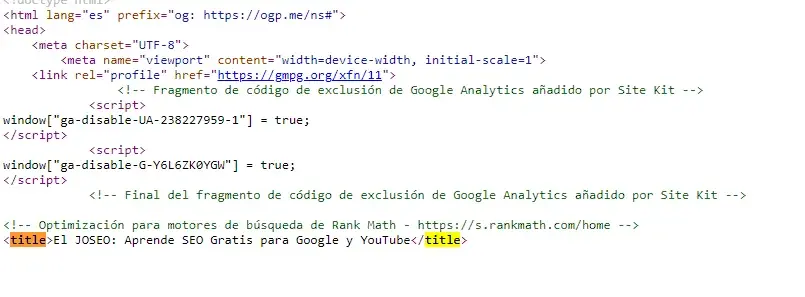
While we usually have a plugin or a dev team helping us implement things for our SEO work, it’s really important to know how it works and how to change it yourself. Trust me, there are plenty of optimizations that can be made directly in the code that no other team has ever considered.
LOAD TIMES
As of writing this article, most load-time-related optimizations (around 90%) need to be handled through HTML code. Here are a few examples:
- Lazy Load: adding this attribute to a page’s images can delay their rendering.
- DOM Optimization: everything you can see when you hit Ctrl+U on any page is called the DOM. Here it’s important to know that the DOM gets rendered/read in order, starting from the top and going down. Some SEO optimizations to speed up load times can include, for example, moving important elements toward the top and, likewise, moving less important ones further down.
- General rendering issues: you’ll notice that when optimizing load times, there are a lot of factors at play, so having a solid grasp of HTML will make it much easier to understand and act on each situation. I’ll be writing an article that dives deeper into this soon.
And those are some of the examples you might run into.
Note: talking about HTML also touches on CSS, JS, and other components, but for now I’ll only focus on the main HTML side of things.
CODE IMPLEMENTATIONS
While you don’t need to know everything about HTML — since you’ll usually have a great dev team backing you up — it’s important to know HTML so that, if you ever need to implement a script or a line of code, you know exactly where to put it and why. One example of this could be structured data, which technically is more JavaScript, but gets inserted into this code. For this kind of implementation, it’s important to understand where each line goes and what it does, which makes it much easier to understand and apply.
CONCLUSION
Overall, I find it really interesting to know about topics related to your work, and trust me, HTML is one of them, even if you don’t work directly with it. Knowing more about HTML gives you better knowledge, better computational logic, and makes you a more well-rounded, effective professional — and person. That sounded a bit inspirational, but it’s true.