Auto-translated from Spanish
That’s right, you read that correctly! You can do SEO for YouTube, and I’m going to walk you through it step by step. At the end, I’ll leave you a few quick tips so you can finally start growing.
What is YouTube SEO?
YouTube SEO covers the different techniques used to rank one of your videos among the billions of results currently on YouTube. Just like SEO in general, the idea here is to create content that’s good and optimized enough for YouTube to think something like:
-Hey, look at this! This user’s got good content, let’s show it to more people.
But how do we do that? Based on the user, obviously. Think about it this way: if you were a user searching for a video on how to make Italian pasta, what you’d want is a concise video that gets straight to the point, showing you the easiest and fastest way to cook it. But now, if you were a user searching for how to fix your PC monitor, in that case, you’d want something more detailed so you don’t break the monitor and end up with nothing.
So the first step is to understand how people currently search for that content and which videos show up for the query you want to rank for.
How Do You Do SEO for YouTube?
Once you’ve identified that video, the hardest part is left: actually making it. There are a lot of factors you need to keep in mind when it comes to ranking a video on YouTube, so I’ll leave you my landing page on How to Do SEO for YouTube, where you’ll find EVERYTHING you need to rank on YouTube.
If you haven’t checked it out yet, here are a few quick tips that will help:
- Thumbnails: everything comes down to the eyes — or rather, everything comes down to the thumbnail. You need to make a thumbnail that grabs attention, stirs up some emotion, and encourages a click.
- Put the keyword in the video title: just like SEO on Google, you need to include the keyword or query you want your video to show up for. To find it, do some keyword research.
- The right length: as we already talked about, use the length of the top-ranking videos as a guide — it’ll give you a rough maximum and minimum runtime you shouldn’t go beyond.
- Include a varied description: a lot of people might search for “Italian food cookbook,” “Italian pasta recipe,” “Italian food to make,” and plenty of other related terms. The idea is to include those variations in your description to cover more keywords.
- Don’t stress about it: SEO has one trait we can’t change for now — its results take time (6 months to a year) — so if you want to see real results, you’ll have to be patient. If you did the work right from the start, it’ll rank. If not, well, you can always put out another video on how to make French pasta.
If you search YouTube for how to cook Italian pasta, you’ll get the videos currently sitting in that top spot — and as I mentioned, they’re not particularly long, averaging around 6 minutes.
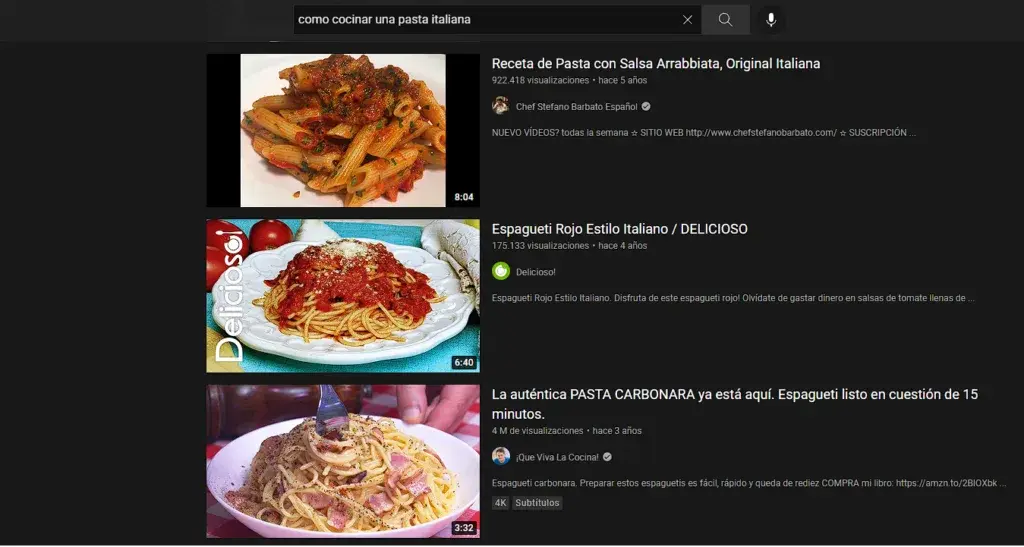
Example #2
As you probably know, I have a gaming channel called CONKER. On that channel, I’ve adopted this kind of organic, evergreen strategy. One of my recent success stories was ranking on YouTube for when someone searches “BATTLEFIELD 4” — basically the game’s name. By doing this research and everything I mentioned above, I get a solid number of views and subscribers daily without “doing anything.”
Benefits of a YouTube SEO Strategy

Low Maintenance Costs
Once you’ve done an excellent job putting together an unbeatable video, there’s little else to do — what you need from there is time to capitalize on all those searches.

More Engaged Viewers
Users who arrive through organic search are generally more willing to interact with your content, and as a side effect, you’ll have a better shot at converting them into subscribers or repeat viewers.

Greater Chance of Visibility
With YouTube SEO, you’ll be able to compete for those views instead of relying purely on luck to get found among thousands of competitors. Work hard and work smart, and your effort will pay off.
Video on how to do YouTube SEO
Search intent: key to growing
In SEO, we talk about search intent to classify the different kinds of user queries. If someone searches, What is YouTube SEO?, they’re in an informational stage — meaning their search intent is to learn about something.
But if that same person searches: Buy YouTube SEO course, their intent has clearly shifted — they no longer just want information, they want to buy.
Ask yourself: what search intent do you want to cover with this video? That will make things a lot easier.