
Auto-translated from Spanish
Understanding the business you’re doing SEO for is one of the biggest keys to everything. Getting a full, 360-degree understanding of the company you’re working with will guarantee more fitting, efficient, and overall better optimizations.
HOW DO YOU UNDERSTAND THE BUSINESS?
Honestly, there’s not much to say here… you need to ask about the business! You should know what products or services they sell, who their main competitors are, who their buyer or target customer is, and — a question I love asking in SEO consultations — what would they like to achieve with these SEO optimizations, and where would they like to rank on Google?
With all of that in hand, keep in mind that your SEO actions will be much more focused, and overall, better.
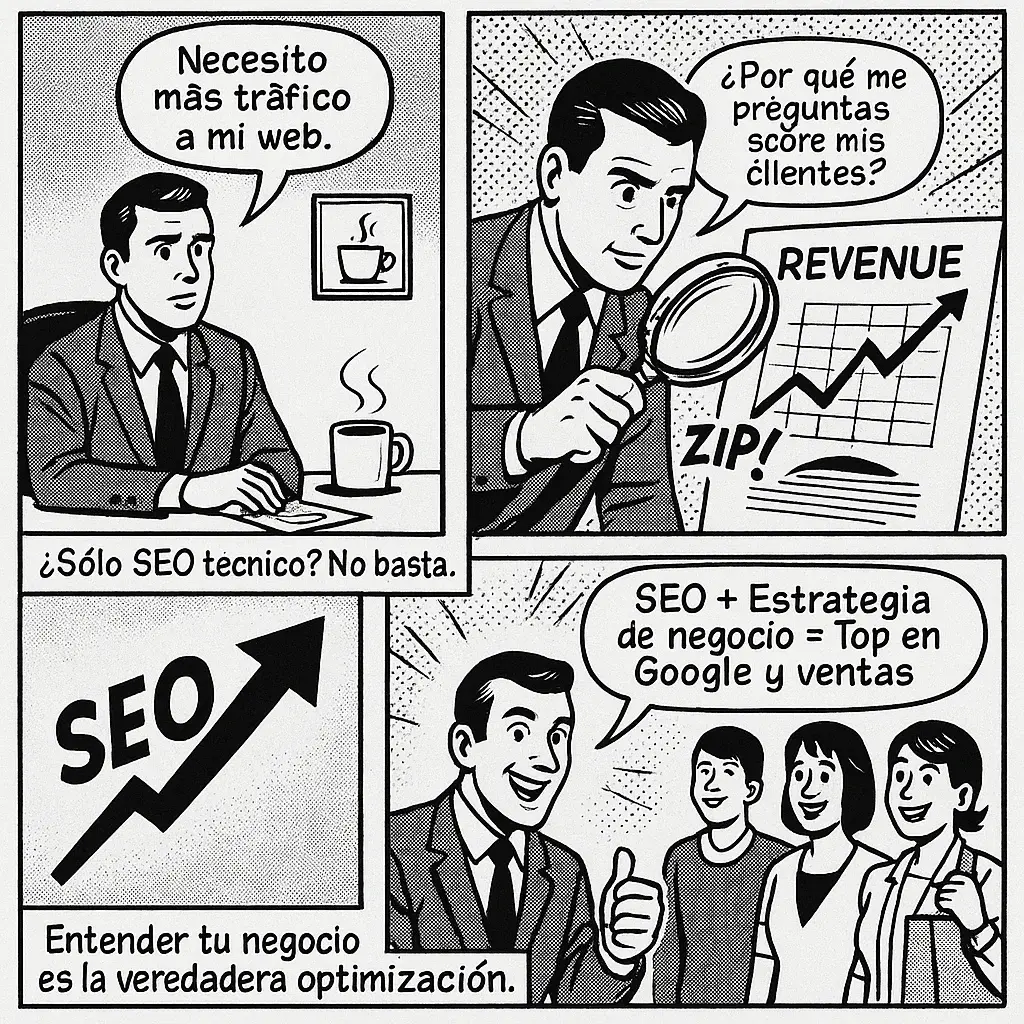
I’m leaving this AI-made comic here — it looks pretty cool and helps get the idea across a bit, though AI still isn’t that precise with lettering, heh.
what the company actually does

The most basic question, and at the same time, one of the most powerful. If you deeply understand what the business does, you’ll understand which keywords to target, what type of content to rank, and much more.
Example
An example that happened to me recently while doing SEO consulting: a client came to me with a website selling all kinds of products — pens, notebooks, flashlights, even barbecues. At first glance, you’d think there was good potential to rank organically for transactional keywords like “buy notebooks,” “pens,” and so on. But… after digging a bit deeper into the business, I realized they actually sold these products to companies — meaning products where you stamp the company’s logo on them and sell them wholesale. In that case, the SEO strategy was completely different.
WHAT DOES THE BUSINESS NEED?

Once you understand the business in general, you should also be able to figure out, as a “side effect,” what actually serves the business best — what will bring in the most revenue or money, which… isn’t always what the business owner tells you.
You need to understand the business well enough to build a precise, well-suited strategy that makes your client more money — and, in the end, you too.
Example
The department head might generally know who their target audience is, but things tend to shift online. Based on what shows up on Google, you can figure out what type of people actually consume, or would consume, the business’s content. So be precise and careful with this — your future SEO performance depends on it.
Remember, we’ll cover EVERYTHING we talked about above in the SEO COURSE